For more than 40 years, we have been shaping the future of engineering: we have experienced and led the evolution of simulation, and today we extend its potential through AI and HPC.
We act as a strategic partner enabling scalable innovation, delivering sustainable value through the systematic integration of engineering knowledge and cutting-edge digital solutions. We provide customized digital ecosystems designed to optimize product design and industrial processes, converting technological complexity into measurable and competitive business outcomes.
Serie di Webinar - quarto appuntamento
L'ultimo incontro della serie di webinar si focalizzerà sul tema della trasformazione digitale dei processi aziendali nel contesto del Dimensional Management.
Conferenza
Partecipiamo come sponsor alla Conferenza NAFEMS Italia 2026, che si svolgerà il 7 e 8 maggio presso il Teatro Sociale di Como (Via Vincenzo Bellini, 3 – 22100 Como, Italia). non perdere l'opportunità di incontrarci!
Webinar live gratuito
La crescente complessità dei sistemi ingegneristici rende sempre più difficile ottenere previsioni rapide de affidabili del comportamento fisico durante le fasi di progettazione. In questo webinar verrà mostrato come Simcenter PhysicsAI consenta di sviluppare modelli virtuali predittivi basati sull'intelligenza artificiale, in grado di riprodurre i risultati delle simulazioni fisiche tradizionali con tempi di calcolo drasticamente ridotti.
CASE STUDY
The article discusses advancements in low cycle fatigue analysis for an electric motor's rotor, focusing on a new method implemented in the FEMFAT software. Traditional methods have limitations in accurately predicting material plasticization due to a lack of consideration for the sequence of load peaks, which can affect component lifespan.
automotive femfat

CASE STUDY
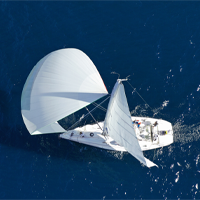
Sport equipment design is characterized by the fact that a fundamental part of a product success depends on the athlete’s feedback.
sports modefrontier ansys ls-dyna

CASE STUDY
This technical case study describes how the ROPS and FOPS of a tractor were numerically studied in the early design phase to ensure compliance with OECD Standard Code 4 (for the cabin’s resistance to longitudinal, lateral and vertical energy or force) and Code 10 (for overhead protection from falling objects).
automotive rail-transport ls-dyna
For over 40 years, we have been shaping the future of engineering. We have witnessed the evolution of simulation, driven it forward, and now amplify it through the power of AI and HPC. Our expertise originates in research laboratories and grows through real-world business challenges, where we transform complex ideas into tangible innovation.
We are the partner that walks alongside you, building digital ecosystems that enhance creativity, design, and manufacturing. Because when experience and cutting-edge technologies come together, innovation is no longer just a goal: it becomes a real, lasting, and transformative impact.
Knowledge plays a leading role in any development process: which is why research is at the heart of EnginSoft’s business and its service offering to corporate customers.
Through our participation in research projects, we realize our objectives of increasing our pioneering technical knowledge, and deepening our existing experience while gaining access to new industries and simultaneously innovating and testing new instruments, software, applications and technologies in SBES.
Research and Technology Transfer Consultancy for co-funded projects
Lifelong Learning is an essential prerequisite for innovation: with our wide range of courses, delivered by sector professionals we ensure that our customers develop their digital skills and provide continuous qualifications for their employees.
We offer both basic and advanced training courses in the field of simulation, customized courses, and coaching, to help you to maximize return on investment when adopting state-of-the-art technologies and to create know-how that is an asset to the company; in other words, broad-spectrum education and training.
In-depth analysis and trends from our experts, with valuable advice to overcome engineering challenges with a systemic and global vision
In the CAE sector new simulation methods continuously try to leave the embryonic or academic state to become mature and adopted by the industry. The success of this transformation depends on several factors, some related to the method itself, some other related to the “environmental conditions”, like the cultural readiness of the industry to rely and adopt new methods or the availability and affordability of hardware resources, that make these methods applicable at industrial level.
With major OEMs committing to increasing numbers of Electric Vehicles and greater electrification, the total electric car stock is growing and researchers and engineers are focusing on increasing the efficiency of e-machines.
Life Support Systems are the backbone of human space exploration. They provide the essential conditions that allow astronauts to survive and work in the harsh environment of space, where there is no breathable air, no drinkable water, and extreme variations in temperature and radiation. At their core, life support systems maintain a stable and safe habitat by supplying oxygen, removing carbon dioxide, regulating pressure and humidity, recycling water, and managing waste.