Endurica
Get Durability Right

Endurica is a product of Endurica LLC.
Endurica is a product of Endurica LLC.
Endurica provides solutions that put you in control of durability issues of elastomers components early in the development cycle. Endurica was founded to accelerate reliable design for elastomer materials and components.
The Endurica fatigue life prediction code is a patented system for analyzing the effects of multiaxial, variable amplitude duty cycles on elastomers. Endurica is the world’s first code for elastomer fatigue life simulation.
The objective is to make CAE-based fatigue life prediction for rubber as widely practiced and as well-understood as fatigue life prediction for metallic materials by empowering developers with reliable methods and tools.
The Endurica solutions help our clients understand and manage the effects on fatigue life of nonlinear material behavior, component geometry, and complex duty cycles. Endurica has served leading companies in the automotive, medical device, offshore, and consumer products industries.

Send your technical questions to our experts!
Connect you with an EnginSoft expert who can provide a reliable answer to your technical question or recommend a
proven solution.
CASE STUDY
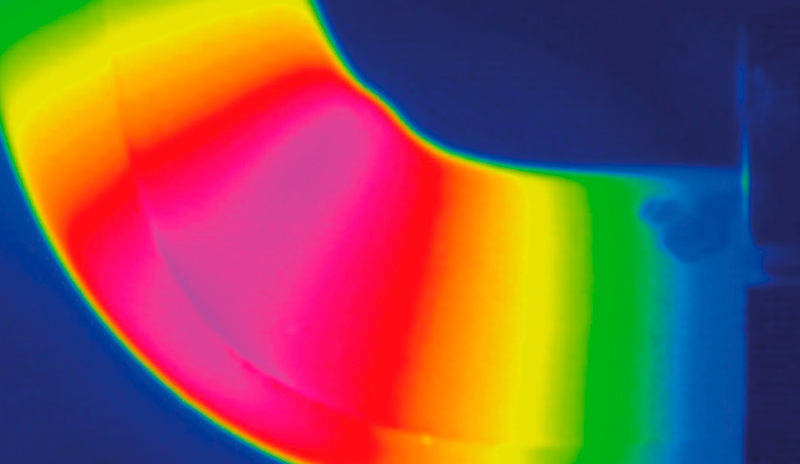
While metals and rubbers both experience temperature-dependent fatigue, rubber's response is significantly more sensitive due to its low thermal conductivity and unique material properties. Endurica’s fatigue solvers account for these complex thermal effects, ensuring accurate analysis and helping engineers optimize rubber durability in real-world conditions.
endurica
CASE STUDY
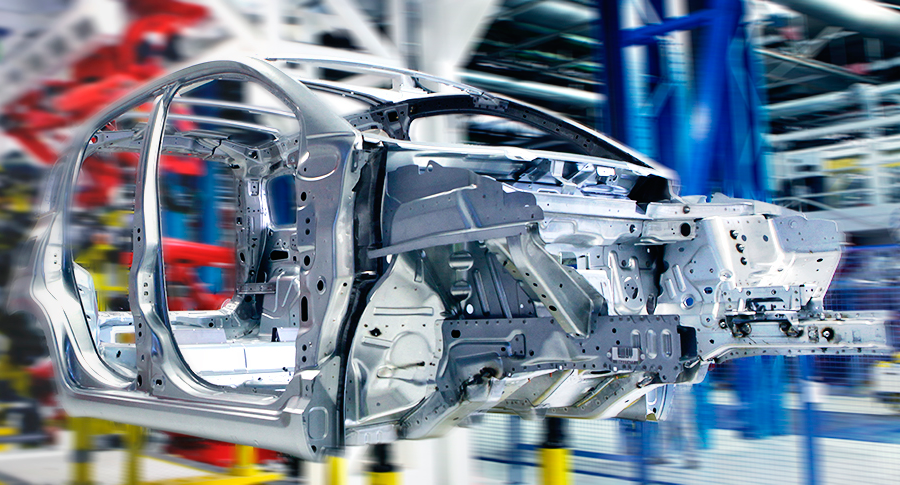
In this case study, EnginSoft engineers explain how they used modeFRONTIER to assist Comau, a Fiat Chrysler subsidiary, to optimize their approach to the preliminary design of production systems for automotive manufacturing system RFQs.
automotive optimization rail-transport modefrontier SIMUL8 iphysics industry4
CASE STUDY
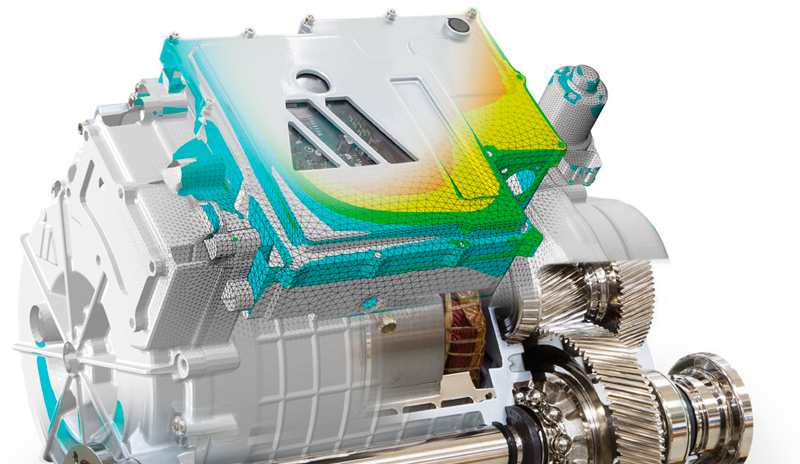
The article discusses advancements in low cycle fatigue analysis for an electric motor's rotor, focusing on a new method implemented in the FEMFAT software. Traditional methods have limitations in accurately predicting material plasticization due to a lack of consideration for the sequence of load peaks, which can affect component lifespan.
automotive femfat
CASE STUDY
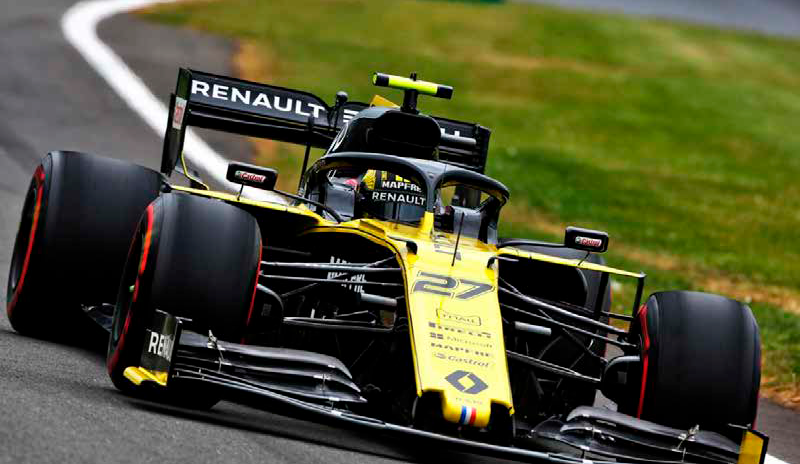
This paper presents the RENAULT F1 Team’s AM process for an aerodynamic insert in titanium Ti6Al4V. Production was optimized by identifying the best orientation for the parts and the best positioning for the support structures in the melting chamber, in addition to using the ANSYS Additive Print module, a simulation software useful for predicting the distortion of a part and for developing a new, 3D, compensated model that guarantees the best “as-built” quality.
automotive additive-manufacturing optimization

CASE STUDY
Particle-based CFD (computational fluid dynamics) methods have become very popular in recent years due to the simplicity of the model configuration process and the ability to solve free surface problems such as splashing.
automotive particleworks