Simcenter Flomaster
Advanced simulation software for thermo-fluid systems

SimcenterTM FlomasterTM is a product of Siemens
SimcenterTM FlomasterTM is a product of Siemens
Simcenter Flomaster is a one-dimensional thermo-fluid system simulation software designed to support the design, commissioning, and operation of complex fluid networks. It provides robust steady-state and transient solvers combined with validated thermophysical correlations to accurately model gas, liquid, and two-phase flows.
Using a single digital model, you can evaluate system performance across a wide range of conditions, including transient events, failure modes, and emergency scenarios—ensuring both efficiency and safety throughout the lifecycle.
The platform allows you to create a digital twin during the engineering phase and reuse it during operation for real-time monitoring, virtual sensing, and performance optimization. Seamless integration with PLM, CAD, simulation tools, and industrial IoT platforms enables faster innovation and supports your digital transformation strategy.

1D modeling for thermofluid flows and complex networks with much shorter run times compared to 3D CFD.
Easily manages large systems (pipe networks, heat exchangers, HVAC systems, automotive/industrial fluid circuits)..
Integrates with CAD and FEM/CFD tools (e.g., Simcenter STAR-CCM+, NX, Teamcenter) and other Siemens tools for system workflows.
Excellent for dynamic scenarios (start-ups, shutdowns, load transients, water hammer).
Predefined libraries (valves, pumps, heat exchangers, tanks, etc.) that speed up modeling and ensure consistency.
Supports controls, valve logic, compressibility, phase change, and other nonlinear phenomena.
Suitable for parameter sweeps, sensitivity analyses, and system optimization.
Enables early virtual validation, reducing physical prototypes and expensive testing.
Established methods comparable with experimental data, used in industry for design and certification.
cripting and batch runs to automate repeated analyses and CAE workflows.
Simulate systems of any size and complexity to optimize performance and ensure safe operation. Analyze dynamic behavior, model critical physical phenomena, and leverage real-time monitoring using the digital twin. Applications include industrial gas networks, cooling systems, Rankine cycle power generation, marine ballast systems, and large-scale distribution pipelines.
Accelerate development and reduce costs by simulating systems early in the design phase. Import geometry directly from P&ID, CAD, or GIS tools to quickly build models and perform rapid system sizing and balancing. Advanced post-processing tools provide immediate insights into system behavior, helping identify issues when changes are still cost-effective.
Best-in-class solvers and validated correlations ensure reliable simulation results. A comprehensive component library based on high-quality experimental data enables confident design and procurement decisions.
Ensure safe and efficient operation under all scenarios with advanced transient simulation. Reuse early-stage models for detailed analyses, maintaining data continuity throughout the engineering process. Simulate critical events such as pump failures, valve closures, priming, blowdown, and venting, while capturing complex effects like pressure surges, cavitation, and gas compressibility.
Model complex phenomena including non-Newtonian fluids, two-phase flows, and rotating machinery. All simulation capabilities are rigorously validated to ensure accuracy and consistency. This enables confident use of the digital twin across the entire system lifecycle for performance optimization and safety assurance.
Maximize return on investment by leveraging the digital twin throughout the system lifecycle. Use it to support procurement, commissioning, and operational decision-making. Connect the digital twin to control systems and industrial IoT platforms to enable real-time monitoring, improve operational insight, and enhance system efficiency and safety.

Send your technical questions to our experts!
Connect you with an EnginSoft expert who can provide a reliable answer to your technical question or recommend a
proven solution.
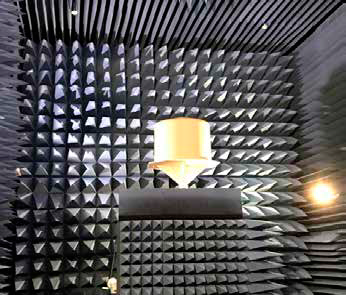
CASE STUDY
Elettronica SpA designs and produces systems for electronic warfare. Each system design is unique according to its platform and purpose. In this article, the company describes how it used CAE to approach the challenging design of a single sandwich radome.
ansys optimization electronics

CASE STUDY
The adoption of SBES has significantly increased in the last two decades, driven by advancements in computing technology and the rise of Industry 4.0, which promotes nine key enabling technologies, including engineering simulation and big data analytics. SBES is crucial for the integration and automation of production systems, improving flexibility, speed, and quality.
automotive construction energy cfd metal-process-simulation
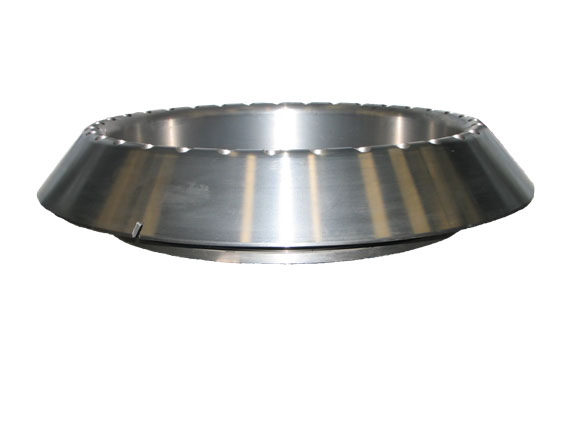
CASE STUDY
The object of this study is a steel diffuser, which for obvious reasons needs to comply with very strict quality guidelines and industry regulations.
metal process simulation die casting metal-process-simulation magma consumer-goods
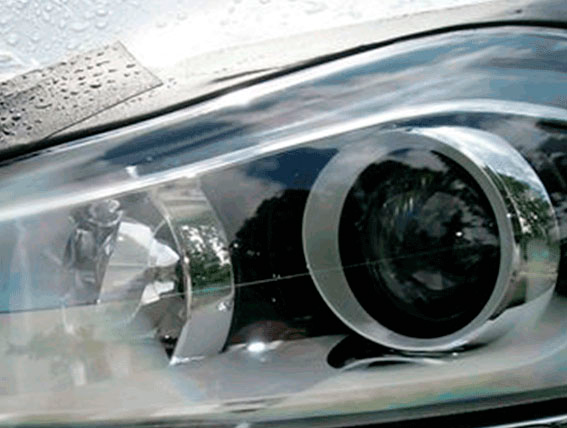
CASE STUDY
EnginSoft implemented a new 3D CFD multi-phase model to simulate the water condensation-evaporation processes inside automotive headlamps for Automotive Lighting, a leading supplier of quality headlights to the OEM market
automotive cfd ansys rail-transport

CASE STUDY
This detailed technical case study describes how the students arrived at a supersonic aircraft drone prototype using MATLAB and modeFRONTIER in order to reduce the time and costs of numerical and wind-tunnel testing.
automotive modefrontier optimization