Rapidminer
Synthesize and Optimize Your Current Systems

Rapidminer® is a product of Siemens
Rapidminer® is a product of Siemens
Rapidminer is a comprehensive data science platform that empowers users to build and deploy advanced analytics solutions. It provides a visual workflow designer, enabling both technical and non-technical users to easily create machine learning models.
Rapidminer supports the entire data science lifecycle, from data preparation to model deployment and monitoring.

Simplifies the creation of complex analytics workflows through a drag-and-drop interface. Reduces the need for extensive coding, making data science accessible to a wider range of users.
Covers all stages of the data science process, including data preparation, model building, and deployment. Provides a unified platform for end-to-end analytics.
Offers a vast library of machine learning algorithms and statistical techniques. Enables users to build diverse and sophisticated models.
Supports deployment of models on-premises, in the cloud, or as embedded solutions. Provides scalability and adaptability to various deployment needs.
Automates repetitive data science tasks. Increases the efficiency of the data science workflow.

Send your technical questions to our experts!
Connect you with an EnginSoft expert who can provide a reliable answer to your technical question or recommend a
proven solution.
CASE STUDY
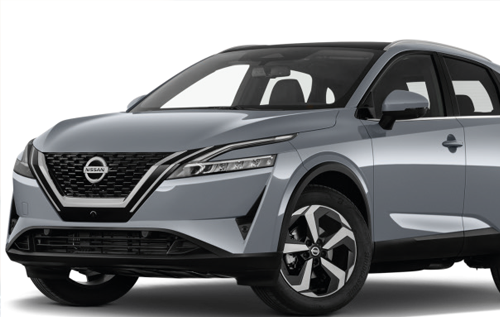
A collaborative project between Nissan Technical Centre Europe, RBF Morph, and the University of Rome “Tor Vergata” showcases how multi-physics optimization is revolutionizing automotive wheel design, particularly for electric vehicles (EVs). By integrating styling, structural analysis, and aerodynamics within a unified workflow enabled by advanced mesh morphing technology (rbfCAE), designers can optimize wheels for lightweight, strength, and aerodynamic efficiency without compromising aesthetics.
automotive optimization
CASE STUDY
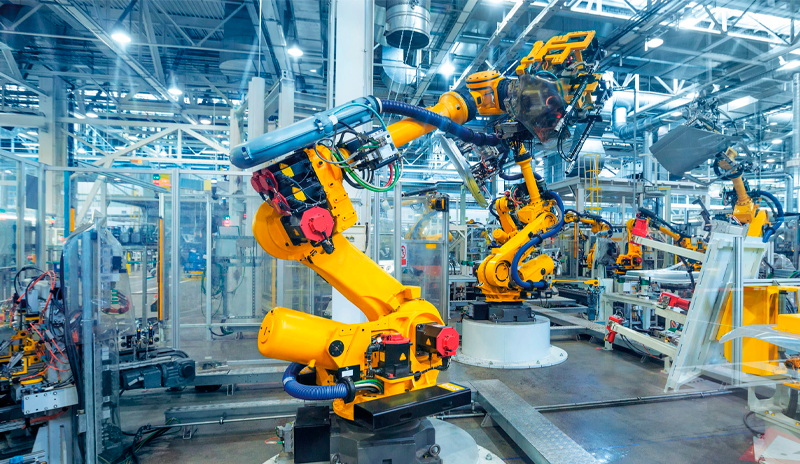
The text discusses the importance of digital simulation models in modern factory design and reconfiguration, particularly in response to shorter product lifecycles and increased customization demands. Traditional design methods often lead to inefficiencies and high costs, making digital simulation essential for creating flexible and adaptable production systems. The article highlights a case study involving a furniture assembly factory, where a manufacturer needed to efficiently handle a variety of custom kitchen cabinet orders. The system integrator was tasked with designing a robotic assembly line that could maintain production efficiency despite the high variety of products.
industry4 SIMUL8
CASE STUDY
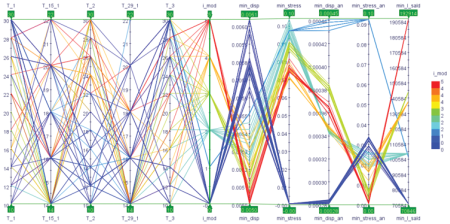
This technical article describes how engineers tackled a design optimization challenge to ensure the structural integrity of a section of the beam of a typical steel bridge whose web of main beams was subject to instability.
civil-engineering modefrontier optimization

CASE STUDY
Modern propeller requirements involve many different characteristics, not limiting only to maximum efficiency, but considering also propeller cavitating behavior and, more and more, its side effects, in terms of radiated noise and pressure pulses.
marine modefrontier optimization

CASE STUDY
This detailed technical case study describes how the students arrived at a supersonic aircraft drone prototype using MATLAB and modeFRONTIER in order to reduce the time and costs of numerical and wind-tunnel testing.
automotive modefrontier optimization