Rapidminer Panopticon
Advanced Data Visualization & Real-Time Streaming Analytics

Rapidminer® PanopticonTM is a product of Siemens
Rapidminer® PanopticonTM is a product of Siemens
In fast-moving industries — from manufacturing and finance to healthcare and energy — delays in decision-making can be expensive. Relying on end-of-day reports often means missing profitable opportunities or failing to respond to operational risks, regulatory requirements, or threats to performance until it’s too late.
Rapidminer Panopticon empowers business users, analysts, and engineers to build, adapt, and deploy sophisticated data visualization and streaming analytics applications through an intuitive drag-and-drop interface. It connects to virtually any data source — big data platforms, SQL/NoSQL databases, message queues, CEP systems, and more — and delivers visual interfaces that turn massive datasets into clear, actionable insights.

Access high density visualizations designed to make complex data easy to understand. Spot correlations, clusters, trends, outliers, and anomalies within seconds.
Deploy Rapidminer Panopticon on AWS, Azure, Google Cloud, or Oracle Cloud, or use containerized environments via Docker. On-premises deployment is also available for organizations with strict security needs.
Rapidminer Panopticon provides native connectors for all major data systems — SQL/NoSQL databases, big data stores, flat files, real-time message queues like MQTT and Kafka, and specialized time series databases — all without coding or middleware.
Understand relationships, structures, causal links, and outliers within your data. Gain a complete view of operations and securely share dashboards and reports across the entire organization.
Easily build analytical dashboards and streaming applications with a point and click interface. Adapt quickly to changing business requirements and deploy new dashboards in minutes.
Auto-generate smart dashboards and charts from data source keywords. Visualize complex datasets with built in machine learning and predictive models — or plug in your own — all within the same interface.
Handle high volume, high velocity data streams and compare them instantly with historical time series. Drill down to nanosecond timestamps and replay streams for retrospective analysis.
Set up alerts for your users in seconds. Choose on screen notifications, emails, or audible alerts, based on data from streaming sources, CEP engines, message queues, or historical databases.
Easily embed Rapidminer Panopticon charts, dashboards, and reports within enterprise applications with support for SSO, automated embed link generation, and CORS.

Send your technical questions to our experts!
Connect you with an EnginSoft expert who can provide a reliable answer to your technical question or recommend a
proven solution.

CASE STUDY
Modern propeller requirements involve many different characteristics, not limiting only to maximum efficiency, but considering also propeller cavitating behavior and, more and more, its side effects, in terms of radiated noise and pressure pulses.
marine modefrontier optimization
CASE STUDY
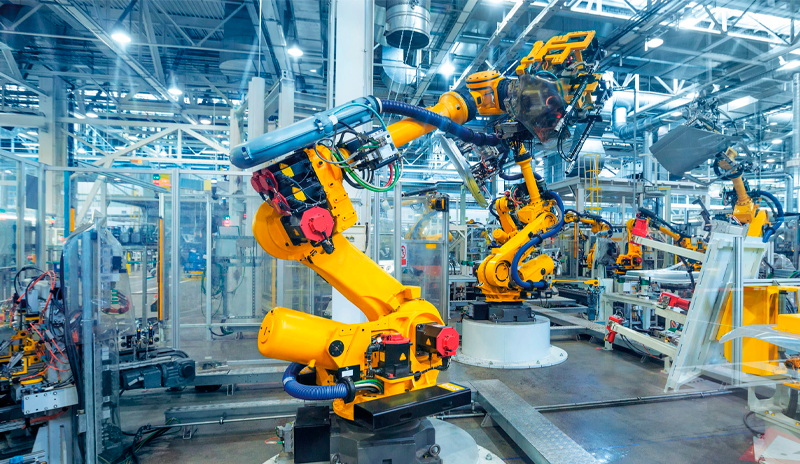
The text discusses the importance of digital simulation models in modern factory design and reconfiguration, particularly in response to shorter product lifecycles and increased customization demands. Traditional design methods often lead to inefficiencies and high costs, making digital simulation essential for creating flexible and adaptable production systems. The article highlights a case study involving a furniture assembly factory, where a manufacturer needed to efficiently handle a variety of custom kitchen cabinet orders. The system integrator was tasked with designing a robotic assembly line that could maintain production efficiency despite the high variety of products.
industry4 SIMUL8

CASE STUDY
This brief article summarises how California-based electric car company, Lucid Motors, used the CAE application, ModeFRONTIER for performing Computational Fluid Dynamics (CFD)
automotive optimization modefrontier
CASE STUDY
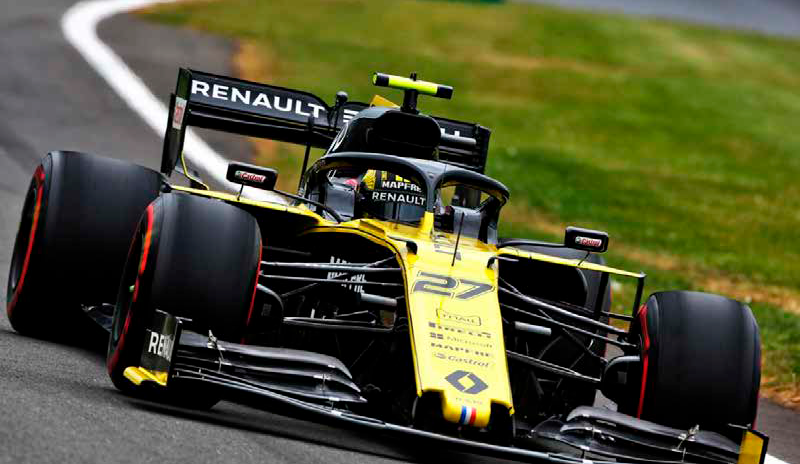
This paper presents the RENAULT F1 Team’s AM process for an aerodynamic insert in titanium Ti6Al4V. Production was optimized by identifying the best orientation for the parts and the best positioning for the support structures in the melting chamber, in addition to using the ANSYS Additive Print module, a simulation software useful for predicting the distortion of a part and for developing a new, 3D, compensated model that guarantees the best “as-built” quality.
automotive additive-manufacturing optimization
CASE STUDY
The text discusses the importance of digital simulation models in modern factory design and reconfiguration, particularly in response to shorter product lifecycles and increased customization demands. Traditional design methods often lead to inefficiencies and high costs, making digital simulation essential for creating flexible and adaptable production systems. The article highlights a case study involving a furniture assembly factory, where a manufacturer needed to efficiently handle a variety of custom kitchen cabinet orders. The system integrator was tasked with designing a robotic assembly line that could maintain production efficiency despite the high variety of products.
industry4 SIMUL8