Simcenter STAR-CCM+
Multiphysics CFD software for real-world engineering performance

SimcenterTM STAR-CCM+TM is a product of Siemens
SimcenterTM STAR-CCM+TM is a product of Siemens
Simcenter STAR-CCM+ is an advanced multiphysics computational fluid dynamics (CFD) solution designed to accurately replicate real-world conditions. As products become more complex, capturing all relevant physical phenomena is essential to predict performance with confidence.
Built as a fully integrated multiphysics platform, Simcenter STAR-CCM+ minimizes assumptions and approximations, delivering accurate, efficient, and comprehensive simulation capabilities across a wide range of engineering scenarios.
With Simcenter STAR-CCM+, you can trust that your simulated results closely reflect real-world behavior. Beyond fluid flow and heat transfer, the software supports multiphase flows, particle dynamics, reactive flows, fluid-structure interaction, aeroacoustics, rheology, and electromagnetics.

Work within one integrated platform covering the entire workflow—from meshing and multiphysics simulation to data analysis, photorealistic visualization, and VR experiences.
Go beyond traditional CFD. The fully integrated solver enables even the most advanced multiphysics simulations within a single environment.
Accelerate your simulation process with automated workflows, reusable templates, embedded design exploration tools, and scalable computing across GPU, CPU, and ARM architectures.
A simple and scalable licensing model unlocks all core capabilities, including pre-processing, post-processing, multiphysics modeling, HPC, cloud usage, and design optimization. As your computational needs grow, your license scales with no limitations.
From CAD import to simulation, optimization, and results analysis, everything is managed within a single platform. High-quality geometry handling, automated meshing, efficient solvers, and advanced post-processing ensure reliable, repeatable workflows.
Analyze and communicate results effectively using plots, histograms, customizable monitors, and reports. Advanced post-processing tools support design exploration by helping engineers identify optimal solutions, understand performance trends, and eliminate unfeasible designs. Multi-design visualization features enable easy comparison across datasets.
Work directly with your CAD data through robust import tools or interactive CAD control. Prepare geometries efficiently using advanced tools such as automatic defeaturing, surface repair, and automated surface wrapping.
Simcenter STAR-CCM+ supports a complete range of flow simulations: Compressible and incompressible flows, Subsonic to hypersonic regimes, Laminar and turbulent conditions and Multiphase and complex flow behaviors. In addition to traditional finite-volume methods, the software includes Smoothed Particle Hydrodynamics (SPH), a meshless approach ideal for complex geometries and dynamic simulations.
Simulate conduction, convection, radiation, conjugate heat transfer, and boiling within a unified environment to accurately predict temperature behavior in fluids and solids.
Access a comprehensive library of models for noise prediction, including steady-state, DES/LES, propagation models, and acoustic perturbation equation solvers.
Combine CFD (finite volume) and structural simulation (finite element) to analyze fluid-structure interactions within a single interface. Furthermore model complex fluids with viscous and viscoelastic behavior for advanced material simulations.
Simulate a wide range of electromagnetic applications, from valves and actuators to transformers and electric machines.

Send your technical questions to our experts!
Connect you with an EnginSoft expert who can provide a reliable answer to your technical question or recommend a
proven solution.

CASE STUDY
This technical article describes how high-end numerical Computational Fluid Dynamics (CFD) simulations were applied to mimic the realistic operating conditions of a Ventricular Assist Device (VADs) and analyze its hemodynamics in order to identify potential areas for optimization of the device’s performance, safety and efficacy.
ansys cfd biomechanics

CASE STUDY
The adoption of SBES has significantly increased in the last two decades, driven by advancements in computing technology and the rise of Industry 4.0, which promotes nine key enabling technologies, including engineering simulation and big data analytics. SBES is crucial for the integration and automation of production systems, improving flexibility, speed, and quality.
automotive construction energy cfd metal-process-simulation

CASE STUDY
In this case study, LION Corporation uses Particleworks to simulate fluid flow to improve the design of a new cap spout for its new HARETA brand of laundry detergent.
particleworks cfd consumer-goods mechanics
CASE STUDY
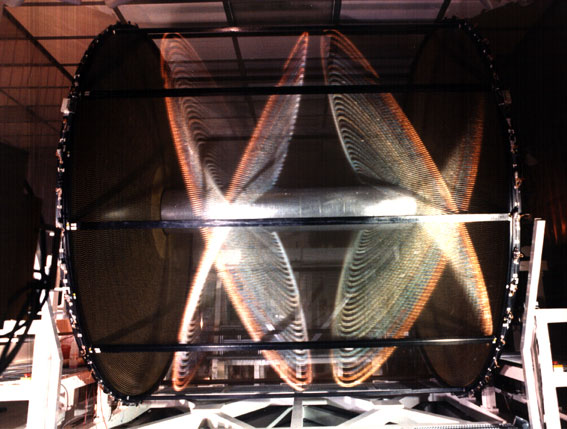
The ultimate goal of the study was to optimize the Drift Chamber’s performance in terms of stiffness, strength and weight o be mounted on the Mu2e particle detector at FermiLAB in Chicago
construction modefrontier ansys optimization energy
CASE STUDY
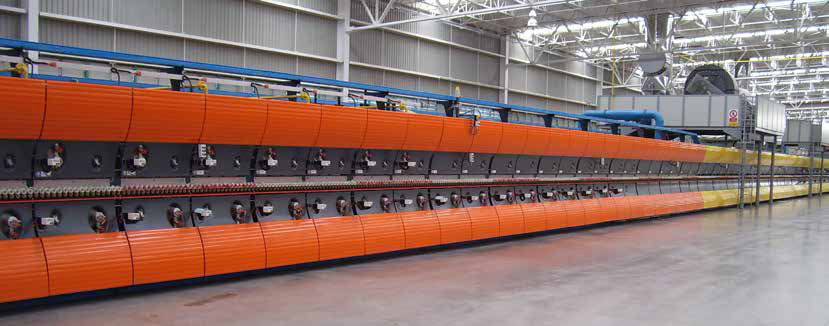
This technical article discusses a comparison study of simulated results and experimental data on the cooling curves, the microstructure and the mechanical properties inside a general commercial ductile iron casting.
die-casting metal-process-simulation magma