Simcenter Amesim
Mechatronic Systems Simulation Platform

SimcenterTM AmesimTM is a product of Siemens
SimcenterTM AmesimTM is a product of Siemens
Simcenter Amesim is a powerful, all-in-one simulation platform designed to meet the challenges of modern engineering. It enables you to model and analyze complex mechatronic systems with advanced capabilities, while its virtual testing environment allows you to identify optimal solutions before building physical prototypes.
By leveraging automated tools and efficient workflows, you can significantly accelerate development cycles. The platform integrates seamlessly with your existing design tools, creating a connected and efficient engineering ecosystem.
From early concept design to final validation, Simcenter Amesim helps you innovate faster, reduce costs, and minimize risks in an increasingly competitive market.

Access extensive multi-physics libraries with validated components to handle even the most complex system designs. From initial sizing to full system integration, build accurate and reliable virtual prototypes.
Scale your simulations from simple models to advanced system-level analyses. Use powerful exploration and post-processing tools to identify optimal configurations and improve system performance.
Work seamlessly within your existing toolchain thanks to industry-standard interfaces. Whether using Simulink, or other Simcenter solutions, you can operate in a fully integrated environment.
Boost productivity with industry-specific solutions, ready-to-use templates, and comprehensive documentation that help you get started quickly and efficiently.
Optimize the dynamic behavior of hydraulic and pneumatic systems while reducing the need for physical prototypes. Model a wide range of applications, including mobile hydraulics, powertrain systems, and aircraft fuel and environmental control systems.
Handle the growing complexity of mechanical systems with advanced modeling techniques. Perform multi-dimensional (1D, 2D, 3D) dynamic simulations, analyze rigid and flexible bodies, and evaluate non-linear friction and coupled behaviors across mechanical, electrical, and hydraulic domains.
Design, simulate, and validate electrical and electromechanical systems from concept to control. Improve performance, analyze energy consumption, and develop control strategies for industries such as automotive, aerospace, and industrial machinery.
Maximize thermal efficiency for HVAC, cabin comfort, vehicle thermal management, and environmental control systems. Visualize energy flows and optimize performance, including energy recovery strategies.
Simulate advanced propulsion architectures using a multiphysics approach. Support innovation in areas such as electric powertrains, reusable space launch systems, and alternative fuels like LNG for marine applications.
Ensure seamless integration across the entire system lifecycle. Simcenter Amesim supports PLM connectivity, co-simulation, design exploration, and model-based control development using FMI standards.
Leverage reduced-order modeling (ROM) powered by machine learning, linear algebra, and statistical methods to enable real-time simulations and deploy executable digital twins for smarter decision-making and improved operational performance.

Send your technical questions to our experts!
Connect you with an EnginSoft expert who can provide a reliable answer to your technical question or recommend a
proven solution.
CASE STUDY
Nederman’s Air Purification Tower is the perfect choice if source extraction is not a satisfying option.
ansys mechanics

CASE STUDY
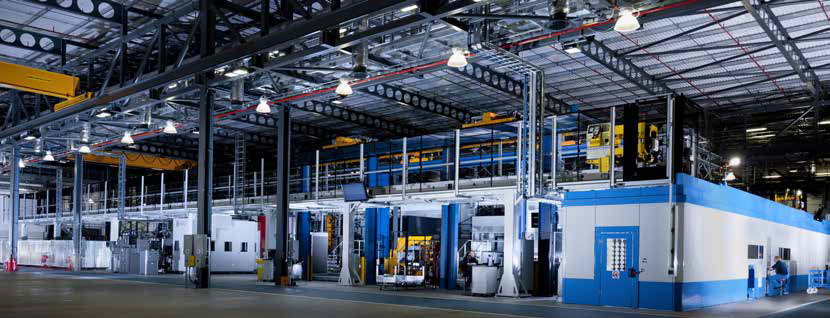
The adoption of SBES has significantly increased in the last two decades, driven by advancements in computing technology and the rise of Industry 4.0, which promotes nine key enabling technologies, including engineering simulation and big data analytics. SBES is crucial for the integration and automation of production systems, improving flexibility, speed, and quality.
automotive construction energy cfd metal-process-simulation
CASE STUDY
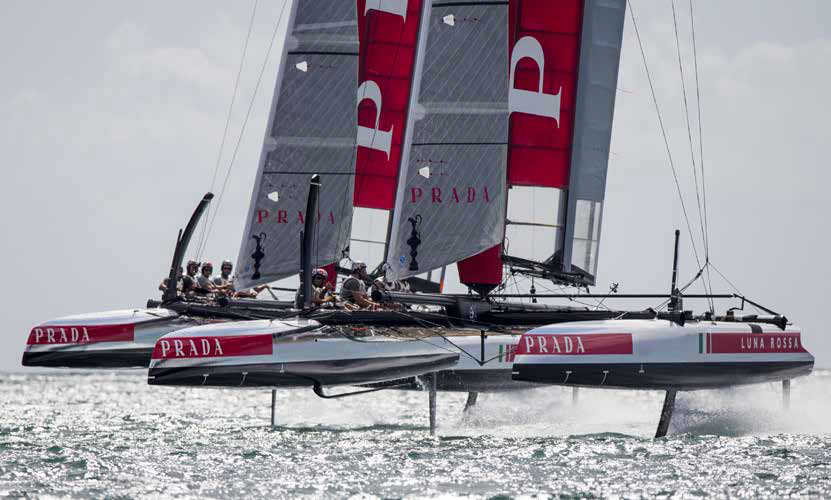
Sailing and engineering teams have been dealing with a new set of challenges ranging from boat handling, tactics and, it goes without saying, the design of these new vessels and their subsystems.
marine optimization modefrontier
CASE STUDY
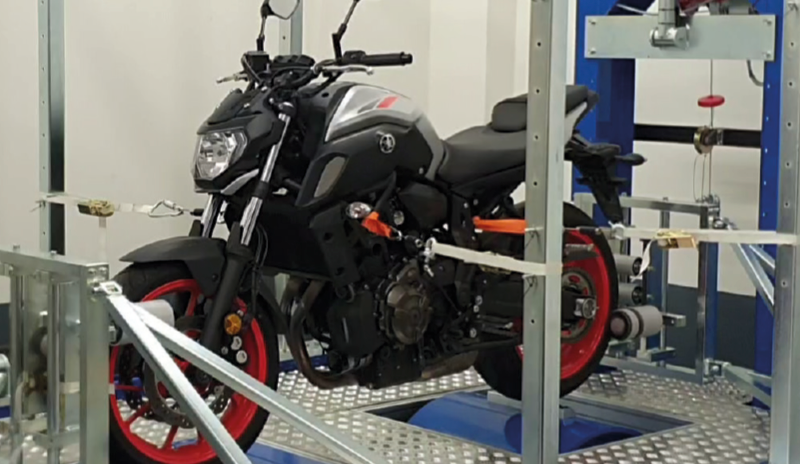
In this article, Del Negro explains how Ricardo is developing solutions to support its customers to predict the lifecycle of motorcycle components, using finite element analysis (FEA) and fatigue analysis.
femfat mechanics automotive
CASE STUDY
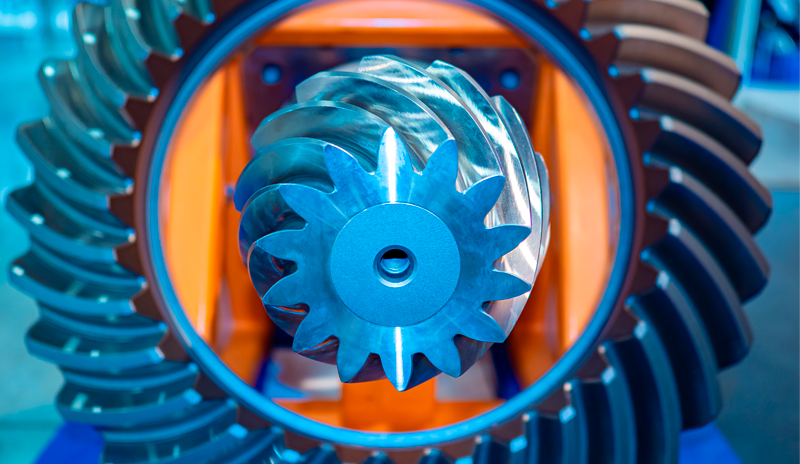
Spiral bevel gear pairs (SBGs) play an important role in transferring power between non-parallel shafts in transmission systems. This paper presents the dynamic results of the case study investigated and illustrates nonlinear phenomena.
masta mechanics