Simcenter 3D
Tackle complex engineering challenges with enhanced simulation efficiency

SimcenterTM 3D is a product of Siemens
SimcenterTM 3D is a product of Siemens
Simcenter 3D is a powerful, fully integrated CAE solution developed to help engineers model, simulate, and optimize product performance with maximum speed, accuracy, and efficiency.
By combining multiple physics domains—such as structural, thermal, acoustic, motion, and electromagnetics—within a single, unified environment, it eliminates the need for disconnected tools and streamlines even the most complex engineering workflows. Its advanced modeling, meshing, and simulation capabilities enable users to accurately predict real-world behavior, reduce development time, and improve design reliability.
Through its integrated approach, Simcenter 3D provides deeper insights across the entire product lifecycle, empowering teams to explore a wider range of design alternatives, minimize reliance on physical testing, and make faster, data-driven decisions. The result is accelerated innovation, enhanced product quality, and a more efficient path from concept to production.

Simcenter 3D provides a single, integrated platform for all CAE pre- and post-processing activities. Advanced geometry manipulation tools allow you to easily simplify and adapt CAD data from any source. Its powerful meshing and modeling capabilities support a wide range of simulation applications while maintaining strong associativity with design data—ensuring your analysis models stay aligned with the latest design updates.
With built-in, industry-leading solvers, Simcenter 3D supports a wide spectrum of simulation disciplines including structural, thermal, acoustic, electromagnetic, and motion analysis. This unified approach simplifies even the most complex multiphysics scenarios, allowing you to accurately predict real-world product behavior.
Simulation is not just about reducing physical testing—it’s about unlocking innovation. Simcenter 3D enables automated geometry changes, model updates, and parameter variations, allowing you to explore a broader design space efficiently. It also integrates seamlessly with third-party solvers such as Abaqus, MSC Nastran, and LS-Dyna, maximizing flexibility and leveraging existing tools.
As part of the Simcenter portfolio, Simcenter 3D connects simulation workflows across 3D, 1D, and testing environments. It integrates into the broader digital thread, ensuring alignment with CAD, product requirements, manufacturing, and other development processes through seamless data management.
Simcenter 3D offers a value-based token licensing model. Instead of purchasing individual modules, teams can access a wide range of capabilities through flexible token packs, optimizing both cost and usability.
A centralized environment supports all simulation activities, enabling faster workflows and efficient multiphysics analysis, such as thermo-mechanical or vibro-acoustic simulations.
Analyze stress, deformation, and structural performance with high accuracy using advanced solvers: Linear analysis and Multistep nonlinear analysis.
Evaluate and improve dynamic behavior, reducing vibration and stress issues: Structural dynamics; NVH (Noise, Vibration, Harshness); Rotor dynamics and Response dynamics.
Optimize sound quality and reduce noise with dedicated acoustic tools and solvers: FEM and BEM methods; Aeroacoustics and vibro-acoustics and Ray acoustics.
Predict product lifespan and ensure reliability through advanced fatigue analysis tools: Fatigue strength analysis; Weld fatigue and Composite fatigue.
Simulate and analyze complex mechanical systems and moving components: Rigid and flexible body dynamics; Control system integration; Drivetrain and gear simulation; Interference detection; Hardware-in-the-loop (HIL) and Driving dynamics and tire models.

Send your technical questions to our experts!
Connect you with an EnginSoft expert who can provide a reliable answer to your technical question or recommend a
proven solution.
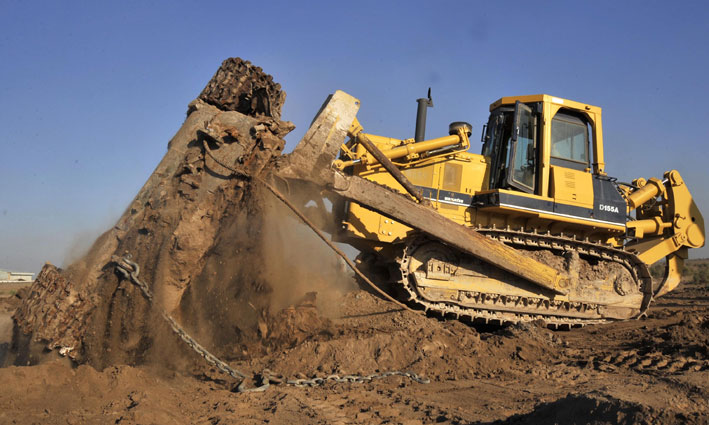
CASE STUDY
In this example, a tracked bulldozer was simulated to evaluate the dynamic behavior of the vehicle on different terrains and with different obstacles. The model can also be used to calculate the loads operating on the vehicle’s structure..
recurdyn automotive mechanics multibody

CASE STUDY
Read the fascinating articles on the vast subject of structural engineering, beginning with a philosophical bent and arguing for the necessity of a skillful and artful intertwining of Engineering, Numerical Simulation, Art and Technology to achieve structures that are both eminently functional yet attractive and appealing.
civil-engineering
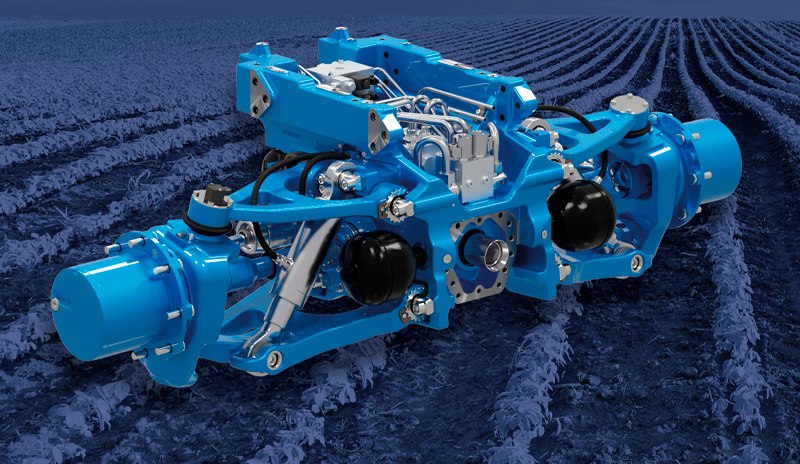
CASE STUDY
The purpose of the case study was to implement a design methodology that used multi-disciplinary simulation and an automated process to analyse thousands of product configurations and highlight vehicle performance distributions in terms of handling, comfort, and cost. This approach ensures that the best solution is always selected.
mechanics modefrontier automotive optimization
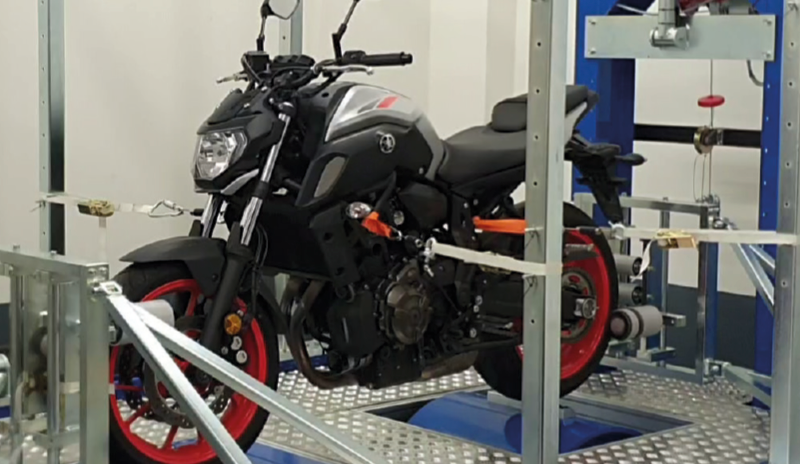
CASE STUDY
In this article, Del Negro explains how Ricardo is developing solutions to support its customers to predict the lifecycle of motorcycle components, using finite element analysis (FEA) and fatigue analysis.
femfat mechanics automotive
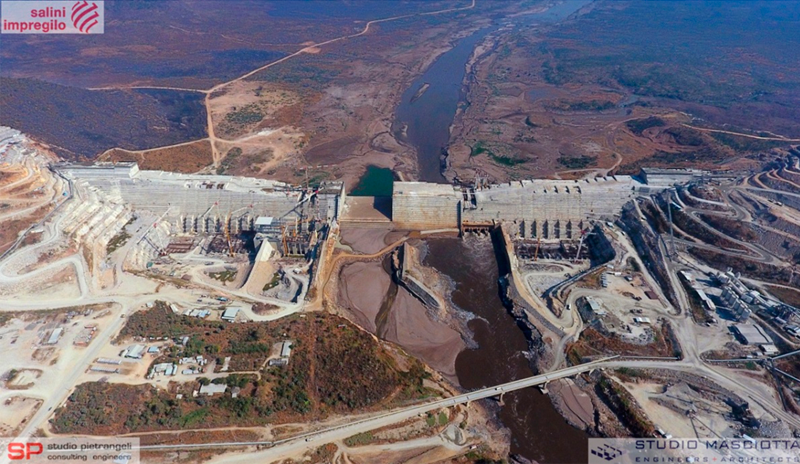
CASE STUDY
The Grand Ethiopian Renaissance Dam (GERD) is situated along the Blue Nile River. Located 500 km north west of the Ethiopian capital Addis Abeba, in the Benishangul-Gumaz region, the GERD will be the largest plant in Africa
civil-engineering construction straus7