The new industrial role of spatial computing
An overview of the integration of immersive reality and artificial intelligence in industrial processes
Futurities Year 22 n°1
By Giulio Cenci | Vection Technologies
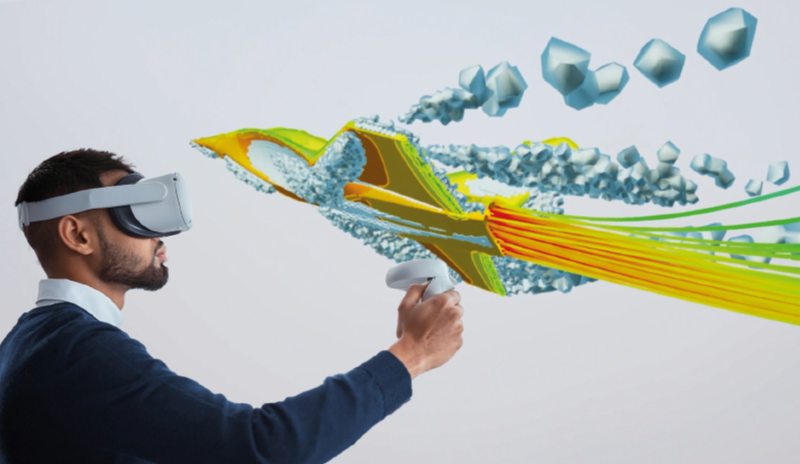
This paper explores the transformative potential of Extended Reality (XR)—encompassing Virtual Reality (VR), Augmented Reality (AR), and Mixed Reality (MR)—when integrated with Artificial Intelligence (AI) in industrial and engineering applications. XR technologies enable businesses to visualize, interact, and optimize product designs, training processes, and customer support functions.
Key applications include:
AI integration improves XR by enabling intelligent features like environmental mapping, voice command processing, and personalized content delivery, making interfaces more intuitive and applications context-aware. The partnership between Vection Technologies and EnginSoft aims to develop X-RHEA, a solution combining VR and AI to enhance engineering simulations and create compelling customer experiences by visualizing complex technical data. In conclusion, XR and AI integration is reshaping industries by streamlining workflows, enhancing collaboration, and enabling better decision-making, which ultimately boosts productivity, reduces costs, and fosters innovation.
Read the article
CASE STUDY
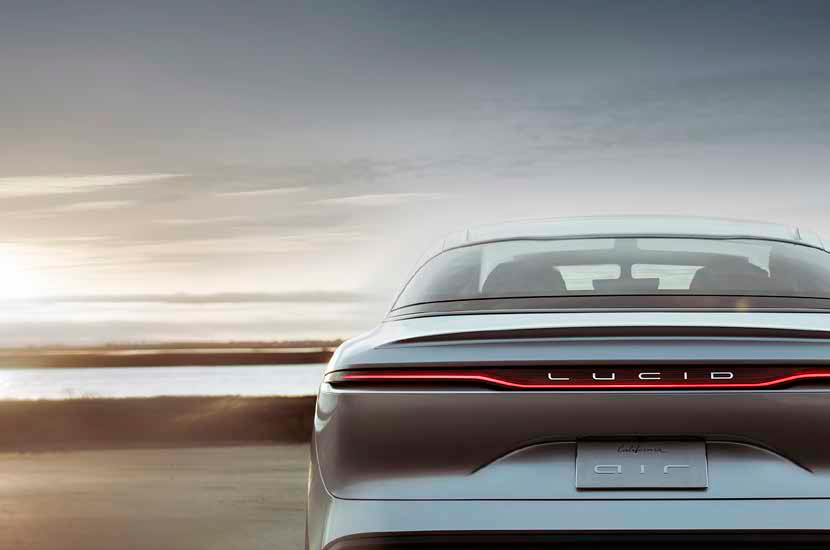
This brief article summarises how California-based electric car company, Lucid Motors, used the CAE application, ModeFRONTIER for performing Computational Fluid Dynamics (CFD)
automotive optimization modefrontier